I Ditched QuickBooks and Ran My Freelance Business on Free Apple Apps for 90 Days

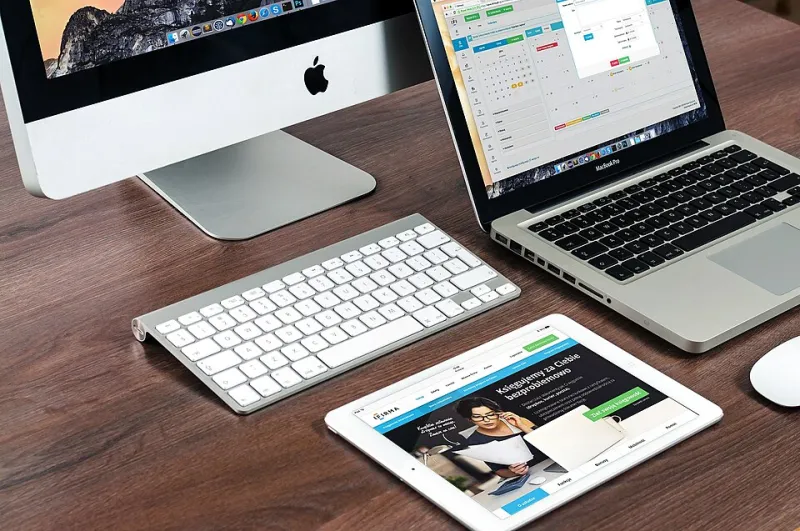
Photo: By Free-Photos from Pixabay, CC0, via Wikimedia Commons
Every January, my business software subscriptions renew like clockwork. Invoicing app: $15 a month. Scheduling tool: $12. Contract e-signature service: $20. By the time the receipts hit my inbox, I was handing over roughly $47 a month — over $560 a year — to do things I vaguely suspected my Mac could already do.
So this year, I ran an experiment. For 90 days — a full fiscal quarter, tax season included — I ran my entire freelance operation on apps that came pre-installed on my MacBook. No QuickBooks, no Calendly, no Dropbox Sign. Just Numbers, Calendar, Freeform, Notes, and iCloud.
Here's how it went, warts and all.
The Setup: Turning Numbers Into My Accounting Department
Numbers gets a bad rap as the app people open once and immediately close. But Apple's template gallery changed my mind fast. There's a built-in invoice template that took me about ten minutes to customize — my logo, my payment terms, my New Jersey sales tax line — and now generating an invoice takes under two minutes.
The bigger win was building a simple ledger. One sheet for income, one for expenses, one for quarterly estimated tax math. I'm a freelancer, not a Fortune 500 company; I don't need double-entry accounting. I need to know who owes me what and roughly what I'll owe the IRS in April.
A few formulas I set up in week one have saved me hours since. Nothing fancy — a SUMIF that tallies income by client, a running total of deductible expenses. If you can build a spreadsheet, you can build this.
Scheduling Without the SaaS
Calendly's whole business model is solving a problem that Calendar partially solves natively. I set up a dedicated "Client Calls" calendar, shared my availability through iCloud's public calendar feature, and told clients to email me two or three slots that worked for them.
Was it as smooth as a booking link? No. Did I lose any clients over the extra email round-trip? Also no. For a solo operation doing maybe eight calls a week, the friction was genuinely negligible. If you're booking 40 discovery calls a month, this is where you'll want to pay for software — and that's a fair trade.
Freeform, the Sleeper App of the Whole Experiment
I'll be honest: I'd never opened Freeform before this experiment. It turned out to be the surprise MVP.
I used it as a client project canvas — mood boards, site architecture sketches, timelines. The killer feature is real-time collaboration over iCloud. Clients could open a board, drop comments, and drag files in without creating an account or downloading anything. I stopped paying for a separate feedback tool entirely.
Where Apple's Stack Fell Short
Let's not sugarcoat it. Three real pain points surfaced over the quarter:
Tax categorization. My Numbers ledger tracks money, but it doesn't auto-categorize transactions or flag deductions the way QuickBooks does. Come March, I spent a long afternoon with my CPA manually sorting things. If your taxes are complicated — multiple income streams, an S-corp, inventory — stick with real accounting software.
Payment collection. There's no Apple-native way to accept ACH or card payments. I still invoice through Numbers, but I collect via my bank's free payment portal or, occasionally, PayPal. It works, but it's the weakest link.
Contract e-signatures. Freeform can't legally bind anyone to anything. I fell back to PDF markup in Preview — clients typed their name into a signature field, which is legally fine for most freelance agreements but felt slightly less polished for bigger corporate clients.
The Bottom Line
Ninety days later, I cancelled three subscriptions and kept one (a $9/month tool for a niche need). That's roughly $38 a month back in my pocket, or about $456 a year — enough for a nice chunk of a new accessory budget, or honestly, just kept as profit.
More than the money, though, the experiment reminded me of something MacRaddle readers already suspect: Apple's built-in apps are quietly more capable than we give them credit for. They're not trying to be everything. They're trying to be the 80% solution for the person who already bought the hardware.
If you're a freelancer or solo founder bleeding $40–$60 a month on business software you barely use, try the experiment yourself for one quarter. Worst case, you go back. Best case, you realize the Mac you already own was the business software all along.